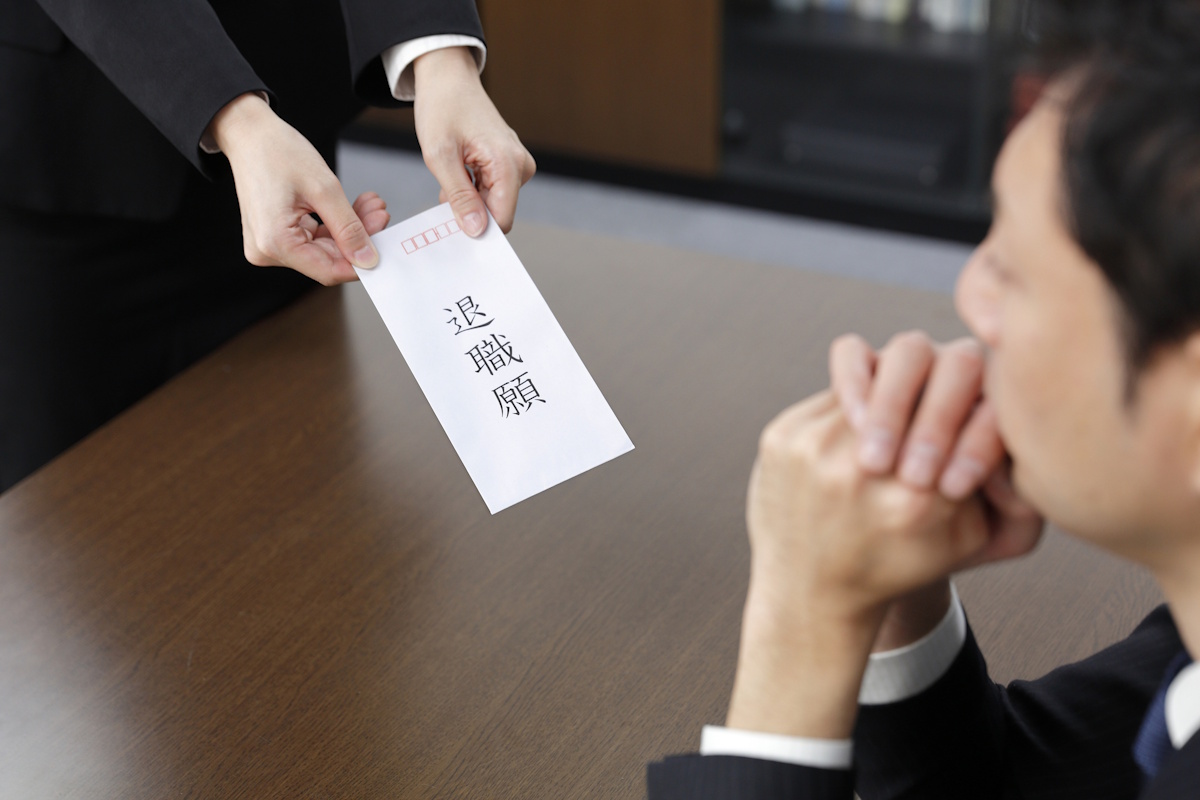
The Phone Call That Changes Everything
Somewhere in Tokyo right now, a phone is ringing. On one end: a company's HR department, bracing for a difficult conversation. On the other: not the employee who is leaving. Not a lawyer. Not a union representative.
A stranger. Someone the company has never met, calling on behalf of a worker who cannot bring themselves to make this call — who may, at this very moment, be sitting at home in a cold sweat, unable to eat, waiting for confirmation that it is over.
The stranger's job is simple: to say the words that their client cannot say. "He won't be coming back."

This is taishoku daiko (退職代行) — Japan's booming industry of professional resignation. For a fee roughly equivalent to a tank of petrol, a company will call your employer, inform them you are leaving, handle all subsequent correspondence, and ensure you never have to set foot in that office again. As of 2025, over one hundred such companies operate in Japan. On a busy January morning — when workers return from the New Year holiday and the reality of another year in the same job becomes suddenly unbearable — some services field over two hundred and fifty enquiries in a single day.
What Taishoku Daiko Actually Is
The service is exactly what it sounds like, and its simplicity is part of what makes it so revealing.
A client contacts a taishoku daiko agency — typically via a website or messaging app, because calling a stranger is considerably easier than calling your boss. They pay the fee: around 22,000 yen, roughly $140, for a regular employee; 12,000 yen for a part-timer. They provide the basic details of their employment. And then they wait.
The agency calls the employer, delivers the resignation, and manages whatever follows — the return of company equipment, the finalisation of paperwork, the extraction of the client from the workplace without any direct contact between the two parties. Some agencies offer unlimited follow-up support. Some provide a legal team for cases where the employer pushes back. Some operate twenty-four hours a day, because the decision to finally quit is not always made at a convenient hour.
Clients, when it is done, sometimes cry.
Not from sadness. From relief.
Why Quitting in Japan Is So Hard
To understand why this industry exists, you have to understand what resigning in Japan actually involves — which is considerably more than handing in a letter.
Japanese workplace culture operates on principles of on (恩) — obligation and debt — and giri (義理) — duty and social responsibility. The relationship between an employee and their employer is not, in the traditional understanding, a simple exchange of labour for money. It is closer to a bond — one that carries genuine moral weight on both sides. The employer who invested in hiring and training you, who tolerated your mistakes and developed your skills, is owed something. Leaving is not a neutral act. It is, in the cultural grammar of the Japanese workplace, closer to a betrayal.
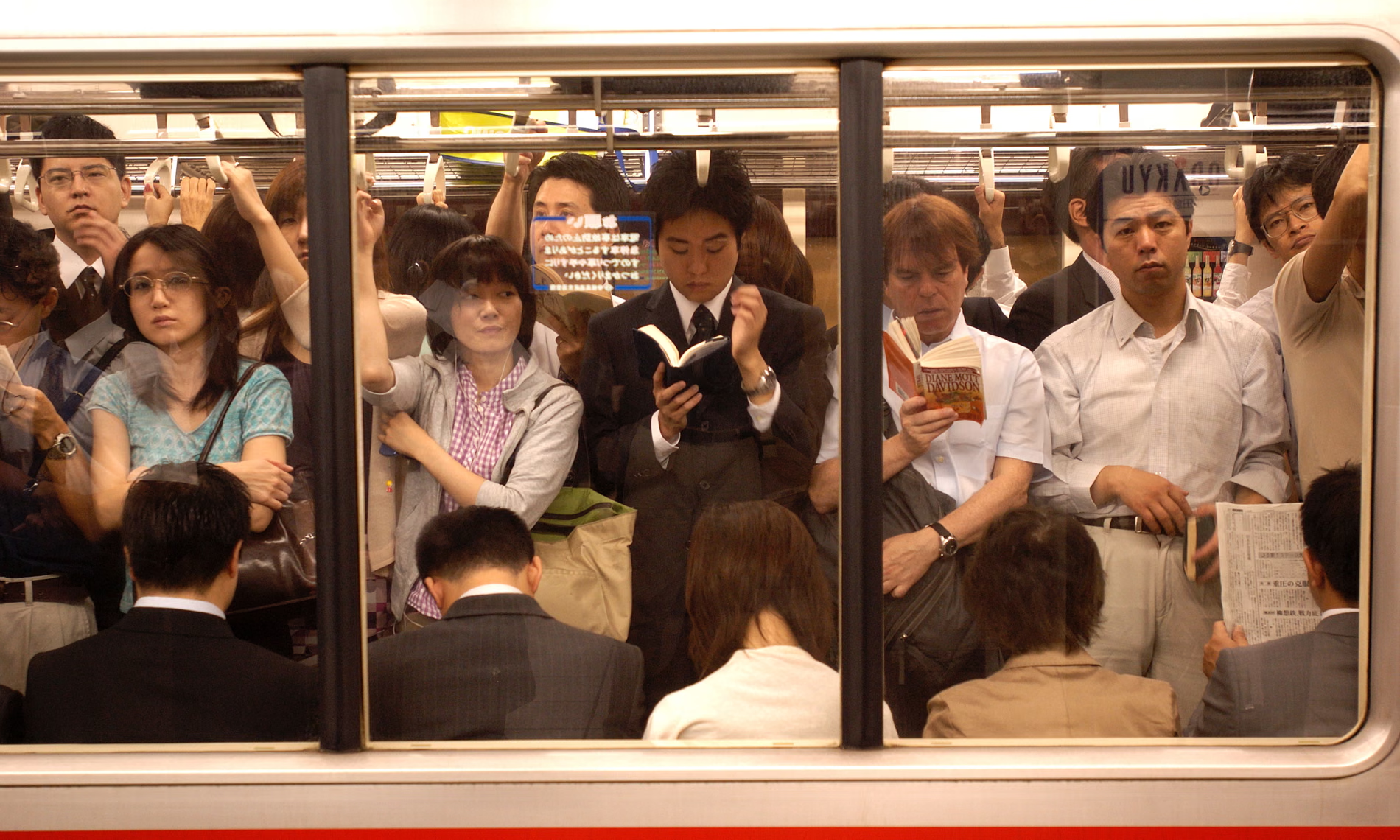
The ritual of resignation reflects this. In a traditional Japanese resignation, the employee is expected to give extended notice — often a month or more — to apologise extensively, to bow, to explain themselves, to absorb whatever response the employer offers including, in many cases, anger, guilt-tripping, or sustained pressure to stay. One in five Japanese workers is at risk of karoshi (過労死) — death from overwork — yet the social mechanics of leaving can make an already intolerable situation feel impossible to escape.
The system, in other words, is very good at keeping people in jobs that are killing them.
Bosses, when informed of a resignation, sometimes erupt. They call repeatedly. They show up. They pressure colleagues to intervene. The employee who has decided to leave faces not just an awkward conversation but a sustained social assault on a decision they have often spent months building the courage to make. For someone raised in a culture that considers inconveniencing others a moral failure, the prospect of causing this level of disruption can be genuinely paralysing.
Which is where the stranger with the phone comes in.
The Numbers Behind the Industry
Taishoku daiko services have existed since the late 2000s but began attracting significant attention around 2017, when younger Japanese workers — raised with different expectations about work-life balance and considerably less patience for the seniority-based hierarchies of traditional corporate culture — started using them in large numbers.

The timing is not coincidental. Japan's younger workforce is, by measurable standards, exhausted and disillusioned. Approximately one in ten Japanese workers logs more than eighty hours of overtime per month — a threshold that researchers use as a marker for serious health risk. The government's own data links workplace stress to nearly three thousand suicide deaths in a single year. A generation that watched its parents sacrifice their health and their family lives to employers who offered lifetime job security is now living in a labour market that no longer reliably provides that security — and is understandably less willing to pay the old price for it.
For this generation, taishoku daiko is not a weakness. It is a rational response to a system that was designed to make leaving as costly as possible, and that is no longer offering enough in return to justify the cost.
The Absurdity Gets More Absurd
In 2023, a story circulated through Japanese media that captured the state of the industry with perfect, almost poetic precision.
A taishoku daiko agency received a call from a client who wanted to resign. Standard procedure. Except the caller was not an individual employee. It was another taishoku daiko agency — calling on behalf of one of their own employees, who had decided to quit and was, apparently, no more capable of resigning from a resignation agency than anyone else was of resigning from a regular job.
The resignation industry had become self-referential. A company built on the premise that quitting is too hard had itself become a place people needed help quitting.
Japan had, in other words, created an industry so perfectly shaped to its own dysfunction that it immediately reproduced that dysfunction within itself.
What It Says About Japan
It would be easy to read taishoku daiko as a punchline — and the Western media, when it covers the phenomenon, generally does. Japan, land of vending machines and robot restaurants, now has machines to quit your job for you. The country has outsourced another human experience.
But this reading misses what the industry actually reveals, which is something more uncomfortable than comedy.

Taishoku daiko exists because the psychological cost of leaving a job in Japan — the obligation, the guilt, the social pressure, the sustained confrontation with an institution that treats departure as betrayal — is genuinely, measurably too high for a significant portion of the workforce to absorb alone. It exists because meiwaku (迷惑) culture makes the act of inconveniencing an employer feel like a moral failing. It exists because a generation of workers has concluded that their mental health is worth $140, and that spending that money is easier than making a phone call.
What it says about Japan is not that Japanese people are weak. It says that a culture can construct social obligations so heavy that even the most basic acts of self-determination — leaving a job, walking away from something harmful — require infrastructure to support them.
And when that infrastructure appears, people use it. Two hundred and fifty times a day, in January alone, crying tears of joy when it works.
Related Articles


You may also like...



International Hostess Bar Since 1993
夢
ORIGIN
・ International Hostess Bar since 1993
・ Japanese Hospitality with International Service
・ Diverse and Charming Floor Ladies
・Located in Shinjuku, Tokyo
・Transparent Pricing
・Easy Online Reservations





.jpg)