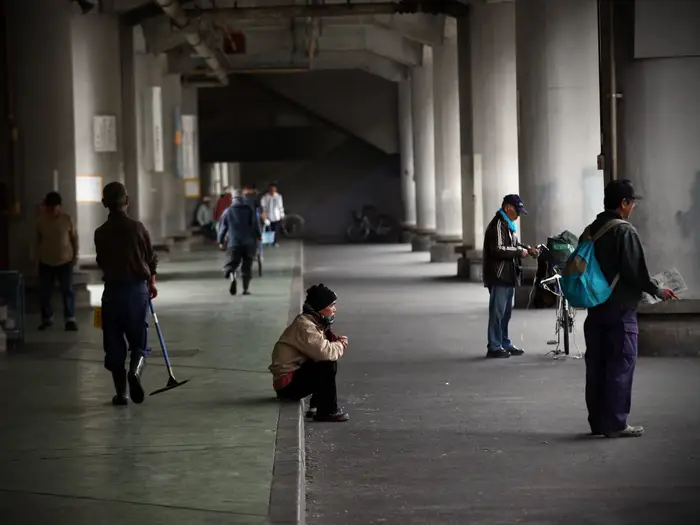
The Truck That Comes After Midnight
The truck arrives after midnight. It has to — the whole point is that the neighbours don't see it.
The crew works quickly and quietly, loading boxes and furniture while the client stands to one side, watching their former life get packed away. By morning, the apartment is empty. The keys are on the counter. The phone is off. And the person who lived there has ceased to exist, at least as far as anyone who knew them is concerned.
.webp)
By the time the sun comes up, they are somewhere else entirely — a different city, a different name on the mailbox, a different life beginning from scratch. Their employer will arrive at work to find their desk abandoned. Their family will call a number that no longer connects. Their friends will piece together, slowly, that something has happened — though they will never be told what.
The police, if contacted, will note the disappearance. They will not, in most cases, look very hard. The person left voluntarily. In Japan, that is their right.
What Jouhatsu Actually Is
Jōhatsu (蒸発) means, literally, evaporation. It is the word Japan uses for people who deliberately vanish from their lives — who walk away from jobs, families, debts, relationships, and identities without warning, without explanation, and without leaving a forwarding address.
It is not a new phenomenon. The term has been in use since at least the 1960s, when rapid urbanisation created for the first time a Japan in which it was genuinely possible to disappear — to move to a city where nobody knew you, to become anonymous in a way that was simply not available in the village or the small town. What has changed is the scale, the infrastructure, and the degree to which Japanese society has quietly decided to accommodate it.

Current estimates suggest that approximately 100,000 people disappear in Japan each year. In 2015, Japan's National Police Agency registered 82,000 missing persons — and found 80,000 of them by year's end. The remaining two thousand were not found because they did not want to be. They had evaporated. And Japan, for the most part, let them.
Why Japan Makes Disappearing Easy
To understand jōhatsu, you have to understand what Japan makes it so difficult to do instead.
Failing in Japan is not a private matter. It is a public one. A man whose business collapses does not merely lose money — he loses face (面目), the social currency that governs his standing in every relationship he has. A woman who divorces does not merely end a marriage — she announces, to her community, her family, and her own internal audience, that she has failed at one of the things she was supposed to succeed at. An employee who quits does not merely change jobs — he breaks a bond that Japanese corporate culture has, for decades, treated as close to sacred.
The shame that attaches to these failures is not metaphorical. It is physiological — an actual, sustained experience of social pain that research has consistently shown to activate the same neural pathways as physical pain. And Japan's social architecture, for all its extraordinary sophistication in other domains, has not historically been very good at providing exits from shame. There is no clean way to say "I failed" and move on. There is no cultural script for public recovery. The weight, once acquired, tends to stay.

Disappearing, in this context, is not cowardice. It is the only available form of relief.
Japan's legal framework makes it easier than it might be elsewhere. Adults can legally deregister from their local city office and re-register in a remote prefecture. Names can be changed after divorce or significant hardship. There is no law against voluntary disappearance — as long as you are an adult and not violating a court order, you are free to go. The state will not chase you. The police, receiving a missing persons report about someone who left of their own volition, will note it and largely move on.
The Industry Built Around Vanishing
Where there is a need in Japan, an industry tends to follow — precise, professional, and priced by complexity.
Yonige-ya (夜逃げ屋) — literally "fly-by-night shops," more commonly translated as "night movers" — are companies that exist specifically to help people disappear. They handle the logistics: the midnight removal of possessions, the transport to a new location, the practical arrangements of starting over. Some offer additional services — help finding new accommodation, guidance on the bureaucratic steps involved in legally changing one's registration, advice on how to avoid being traced.
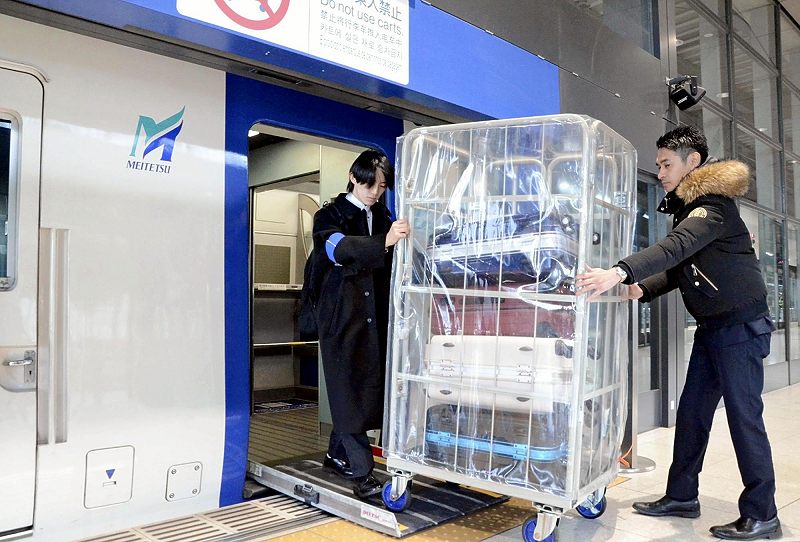
The pricing reflects the range of need. A basic disappearance — one person, limited possessions, moderate distance — costs around ¥50,000, roughly $450. More complex operations — larger households, greater distances, higher secrecy requirements — can run to ¥300,000, around $2,600. One established operator reports helping between one hundred and one hundred and fifty clients vanish each year.
The business card of a yonige-ya, if you were handed one, would look unremarkable. The service it describes is extraordinary only if you have never felt the particular weight that makes people reach for it.
Who Actually Disappears
The clients of Japan's night movers are not, by and large, criminals. They are people at the end of something.
Debt is among the most common reasons — not just financial debt, but the specifically Japanese experience of it, in which defaulting on a loan is not merely an economic event but a social catastrophe that follows a person through every subsequent relationship and opportunity. Personal bankruptcy in Japan carries a stigma that can persist for years after the legal process is complete. Disappearing erases the debt not legally, but socially — the creditors cannot shame someone they cannot find.
Domestic situations account for a significant proportion of jōhatsu cases: men and women fleeing abusive partners, custody situations that have become untenable, family obligations that have become suffocating. Japan's social expectation that family difficulties are private matters to be endured rather than escaped means that the conventional routes available in other countries — intervention, legal protection, community support — are often either unavailable or too shameful to use.
Then there are the people who disappear simply because they are exhausted. Not from any specific crisis but from the accumulated weight of being who they are required to be — the performance of tatemae (建前) sustained over years, the gaman (我慢) that was supposed to produce something and did not, the slow realisation that the life they are living was never quite theirs. For these people, the midnight truck is not running from something. It is running toward the first honest thing they have done in years.
What It Says About Japan
Every society produces people who need to escape. What varies is what they are escaping from, and what the society provides to help them do it.
Japan has built, in jōhatsu, a peculiarly Japanese solution to a peculiarly Japanese problem. The problem is a culture that attaches enormous shame to failure, provides very limited routes back from it, and makes the admission of difficulty feel like a second failure on top of the first. The solution is the ability to simply — quietly, professionally, at two in the morning — stop.
There is something almost Buddhist about it, seen from a certain angle. The self is impermanent. Identities can be shed. The person you were in Tokyo does not have to follow you to Hokkaido. Japan, a culture saturated with impermanence — the cherry blossoms that fall, the incense that burns, the water that flows — has perhaps simply extended that principle to the self.
The truck comes at midnight. By morning, the water has evaporated. And somewhere, a new life has quietly begun.
Related Articles


You may also like...


International Hostess Bar Since 1993
夢
ORIGIN
・ International Hostess Bar since 1993
・ Japanese Hospitality with International Service
・ Diverse and Charming Floor Ladies
・Located in Shinjuku, Tokyo
・Transparent Pricing
・Easy Online Reservations