The Word That Rewrote a Marriage
In April 2014, a Tokyo District Court handed down a ruling that made legal scholars uncomfortable and Western journalists incredulous.
The case was straightforward on its surface: a wife sued a hostess who had conducted a sexual relationship with her husband — a company president — for over seven years. She demanded four million yen in compensation. The court ruled against her. The hostess was not liable, the judge decided, because the relationship had not been personal. It had been professional. The intimacy was a calculated strategy to ensure a valuable client kept returning and kept spending. In precise Japanese terminology, it was an act of makura eigyō (枕営業) — pillow business.
The ruling did not settle anything. It simply made visible a question that Japan had long preferred to leave unasked.
The Water Trade's Ancient Logic
To understand makura eigyō, one must first understand mizu shōbai (水商売) — the "water trade." This is Japan's term for its entertainment and nightlife industry, and the name is deliberate. Water, in Japanese symbolism, represents impermanence: it flows, shifts, and holds no fixed shape. The water trade is the business of the transient — pleasure that exists in the present moment and promises nothing about tomorrow.

Its roots reach back to the Tokugawa era, when Japan's regulated pleasure quarters created legally sanctioned spaces for entertainment and companionship. The geisha (芸者) who emerged from this tradition were trained artists — in music, poetry, conversation — whose role was to make powerful men feel at ease. Physical intimacy, where it existed, was never the primary product. It was a possibility that sometimes arose from genuine closeness cultivated over time.
This four-century-old distinction — between intimacy as professional art and physical access as transaction — is precisely the line that makura eigyō presses against.
What It Actually Is — And What It Isn't
The term translates literally as "pillow sales." It refers to a hostess or nightlife worker forming an intimate relationship with a client — sometimes sexual — to deepen loyalty and increase spending at the establishment.
What it is not is prostitution. Japan's legal definition of prostitution requires a direct exchange of money for intercourse. Makura eigyō involves no such direct transaction. The intimacy is framed as emerging from a relationship, however deliberately engineered that relationship may be. The client pays for the club, the drinks, the company. What develops outside those walls is understood by everyone involved and discussed by no one.

This is what makes the practice so difficult to categorise in Western moral terms — it is not honest enough to be a transaction, and not innocent enough to be a relationship.
It should also be noted that makura eigyō is neither universal nor officially sanctioned. Reputable hostess clubs explicitly prohibit it. Hostesses discovered conducting personal relationships with clients may face serious professional consequences. The practice survives because individual financial incentives are sometimes considerable, and because the grey space it occupies is, by design, difficult to police.
The Emotional Arithmetic
The anthropologist Anne Allison, whose fieldwork in a Tokyo hostess club produced the landmark study Nightwork, describes the core skill of the hostess as emotional labor (感情労働) — the performance of feeling as a professional competence. A hostess does not merely pour drinks. She produces the experience of being valued, desired, and genuinely understood by someone with no obligation to find her client interesting.
The difficulty is that emotional labor, performed consistently and well, becomes indistinguishable from genuine feeling — sometimes even to the person performing it. A hostess who has attended closely to a client for months has, in a real sense, come to know him. Where professional performance ends and genuine connection begins is not always a question with a clean answer.
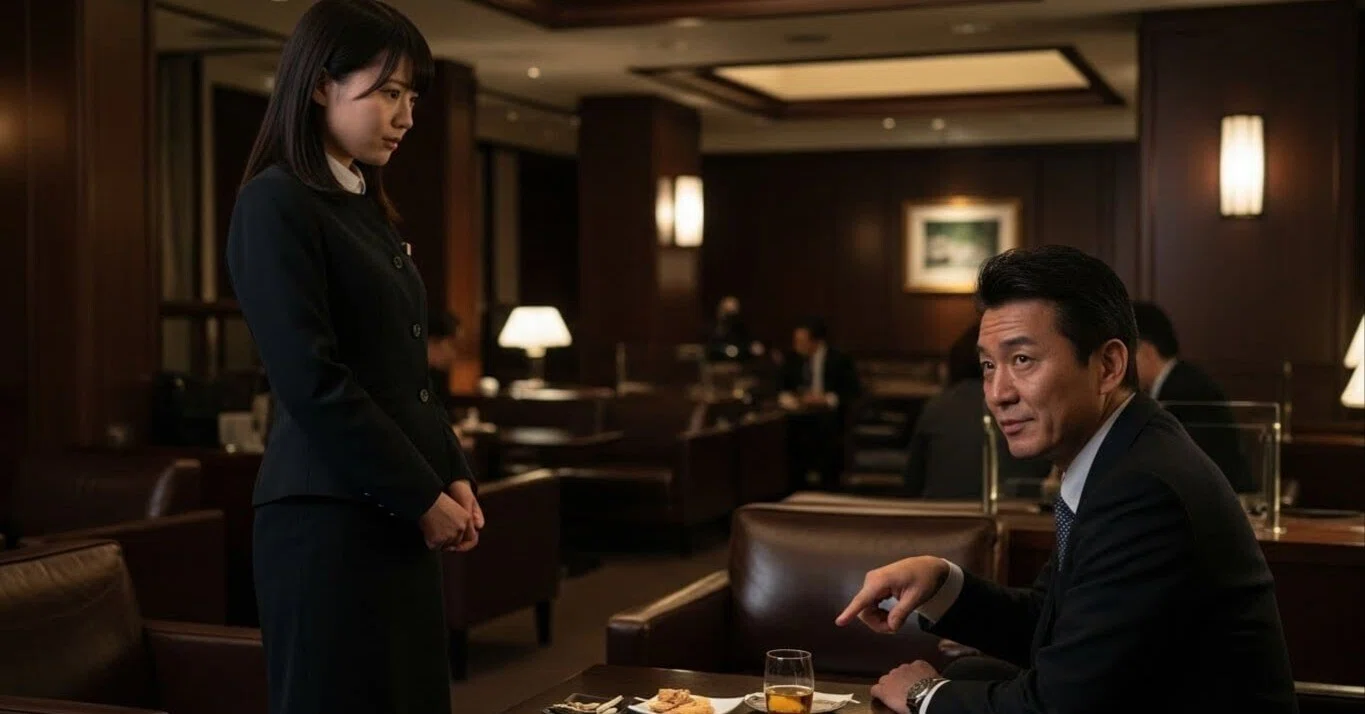
Makura eigyō takes this ambiguity and resolves it commercially. It asks: if a real connection has developed, why not allow it to serve a business purpose? The question is coherent on its own terms. It is also, in most people's judgement, a step that changes the nature of everything that came before it.
The Law and the Seven-Year Question
The Tokyo court's reasoning turned on intent. The wife's claim rested on the premise that her husband had been seduced for personal reasons. The judge found otherwise: the hostess had pursued the relationship for professional ones — to retain a client whose spending was significant to her income.

This produced a conclusion that struck many as surreal: a seven-year extramarital sexual relationship was not legally consequential adultery, because it had been conducted for business purposes. Lawyer Katsuyuki Aoshima noted with evident discomfort that the judge had introduced a new standard without clear necessity — neither party had used the term makura eigyō themselves, and the judge had reached his conclusion without, in Aoshima's view, adequate investigation.
What the ruling captured, perhaps inadvertently, was how deeply Japan has internalised the idea that the water trade operates by different rules — that what happens in mizu shōbai does not translate directly into the moral categories of ordinary life.
What the West Gets Wrong
Western coverage of makura eigyō tends to follow a predictable arc: shock, then fascination, then condemnation from a comfortable distance. Japan's nightlife industry is framed as a system of sophisticated exploitation — women manipulated into providing intimacy under the guise of professional service.
This reading is not entirely wrong. Exploitation exists in Japan's nightlife industry, as it exists in every industry involving power imbalances and financial pressure. The 2025 revisions to Japan's Entertainment and Amusement Business Act, targeting exploitative practices in host and hostess clubs, confirm that Japanese society recognises the problem.

But the reading misses something important. It assumes that women in mizu shōbai are primarily victims of a system they did not choose. The research does not consistently support this. Many hostess club workers describe their work in terms of agency, financial independence, and professional skill.
The more uncomfortable truth — the one Western narratives consistently avoid — is that the grey space makura eigyō occupies is not uniquely Japanese. Every culture involving professional intimacy creates relationships where genuine care and commercial motive coexist. Most cultures manage this by simply refusing to examine it. Japan, characteristically, gave it a name.
Related Articles


You may also like...


International Hostess Bar Since 1993
夢
ORIGIN
・ International Hostess Bar since 1993
・ Japanese Hospitality with International Service
・ Diverse and Charming Floor Ladies
・Located in Shinjuku, Tokyo
・Transparent Pricing
・Easy Online Reservations